
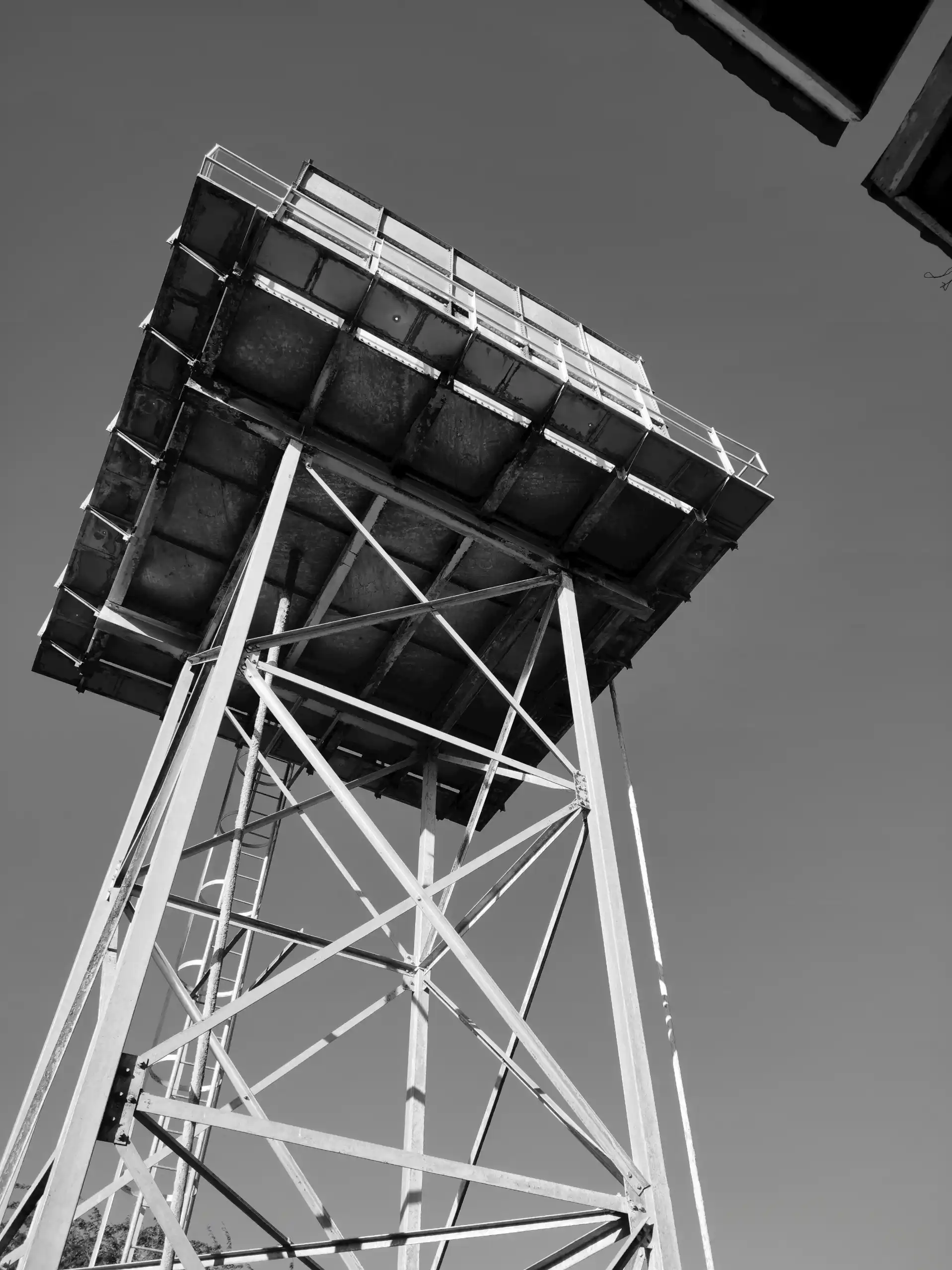
Elevated water storage systems for consistent pressure and supply
Water tower installation plays a crucial role in modern borehole water systems by providing elevated storage that ensures consistent water pressure and uninterrupted supply. In Kenya, where water demand fluctuates across residential, agricultural, and commercial users, water towers act as a stabilizing infrastructure component.
A properly designed water tower system stores pumped groundwater at height, using gravity to distribute water efficiently without continuous pump operation. This reduces energy consumption, minimizes pump wear, and ensures reliable water availability even during power interruptions.
Our water tower installations are engineered for durability, safety, and long-term performance. We design each structure based on load requirements, water demand, wind resistance, and site-specific conditions to ensure structural integrity and operational efficiency.
We evaluate terrain, soil stability, water demand, and elevation requirements to determine the optimal tower height and structural design.
Engineering plans are developed to ensure the tower can safely support full water load while withstanding wind and environmental pressures.
A reinforced concrete foundation is constructed to provide a stable base capable of supporting the entire tower structure.
Steel or reinforced structures are assembled and erected with precision alignment to ensure stability and long-term durability.
High-capacity storage tanks are mounted securely at the top of the structure and connected to the pumping system.
The tower is connected to the borehole pumping system and tested for pressure stability, leakage, and distribution efficiency.
Water towers work by utilizing gravity to create natural water pressure, eliminating the need for constant pumping. This makes them highly efficient for both small and large-scale water systems.
The height of the tower directly influences water pressure. Higher towers generate stronger pressure, allowing water to reach distant points without additional mechanical assistance.
In borehole systems, water towers act as buffers, storing excess water during low demand periods and supplying it during peak usage times, ensuring system balance and reliability.
Each water tower is uniquely engineered to match site conditions and water demand requirements for maximum efficiency and safety.
Water towers provide reliable, energy-efficient water distribution while reducing dependence on continuous pumping systems. They are a long-term investment in water security and infrastructure stability.
By integrating storage and gravity-based distribution, water towers ensure uninterrupted supply even during power outages or pump maintenance periods.